
Nuclear Mechanobiology and Mechanotransduction
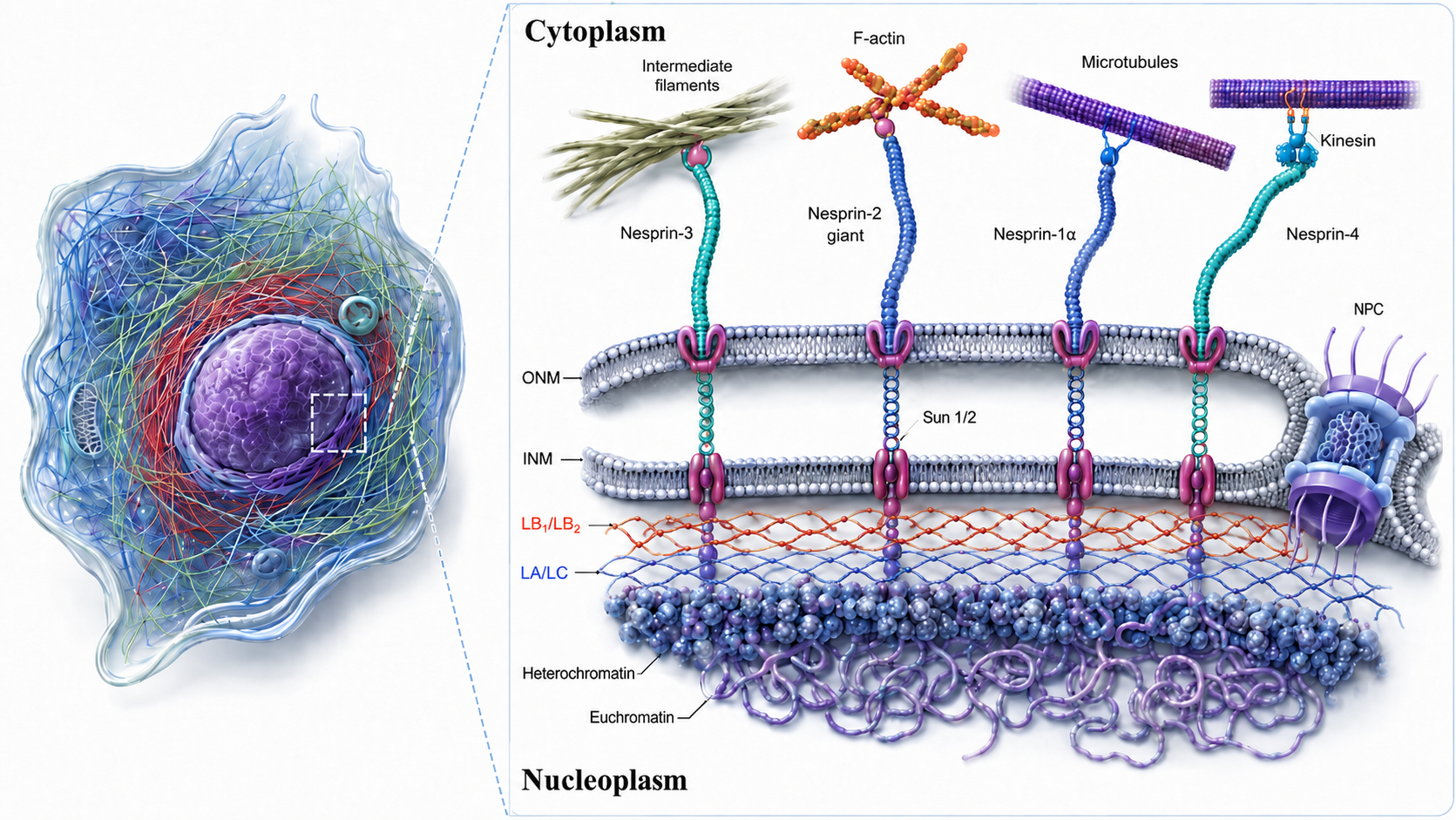
Cells and tissues in living organisms constantly sense and respond to mechanical cues from their environment. The nucleus receives these cues through a process called mechanotransduction, which drives normal physiological events such as cell migration, differentiation, and tissue regeneration. Disruption of this process contributes to pathological conditions such as cancer metastasis, fibrosis, and neurodegeneration.
Our lab studies the nuclear lamina, a meshwork of lamin intermediate filaments and their associated proteins that underlies the inner nuclear membrane. The lamina interacts with both Linker of Nucleoskeleton and Cytoskeleton (LINC) complexes and chromatin. This dual interaction couples the nucleus mechanically to the cytoskeleton and extracellular environment and shapes genome organization. The four lamin isoforms expressed in mammalian cells — lamins A, C, B1, and B2 — differentially engage F-actin, microtubules, and intermediate filament networks via LINC complexes and regulate cell mechanics, mechanotransduction, and migration. However, on what timescales they act and whether they act through direct mechanical linkage to LINC complexes, a fast route, or through slower transcriptional reprogramming via chromatin or both remains unknown. Our research program aims to answer these questions, with implications for the pathology of lamin-associated diseases, including cancer, progeria, dilated cardiomyopathy, and muscular dystrophies.
Graduate students working on the project: