
Implantable Electronics for Disease Studies and Tissue Regeneration
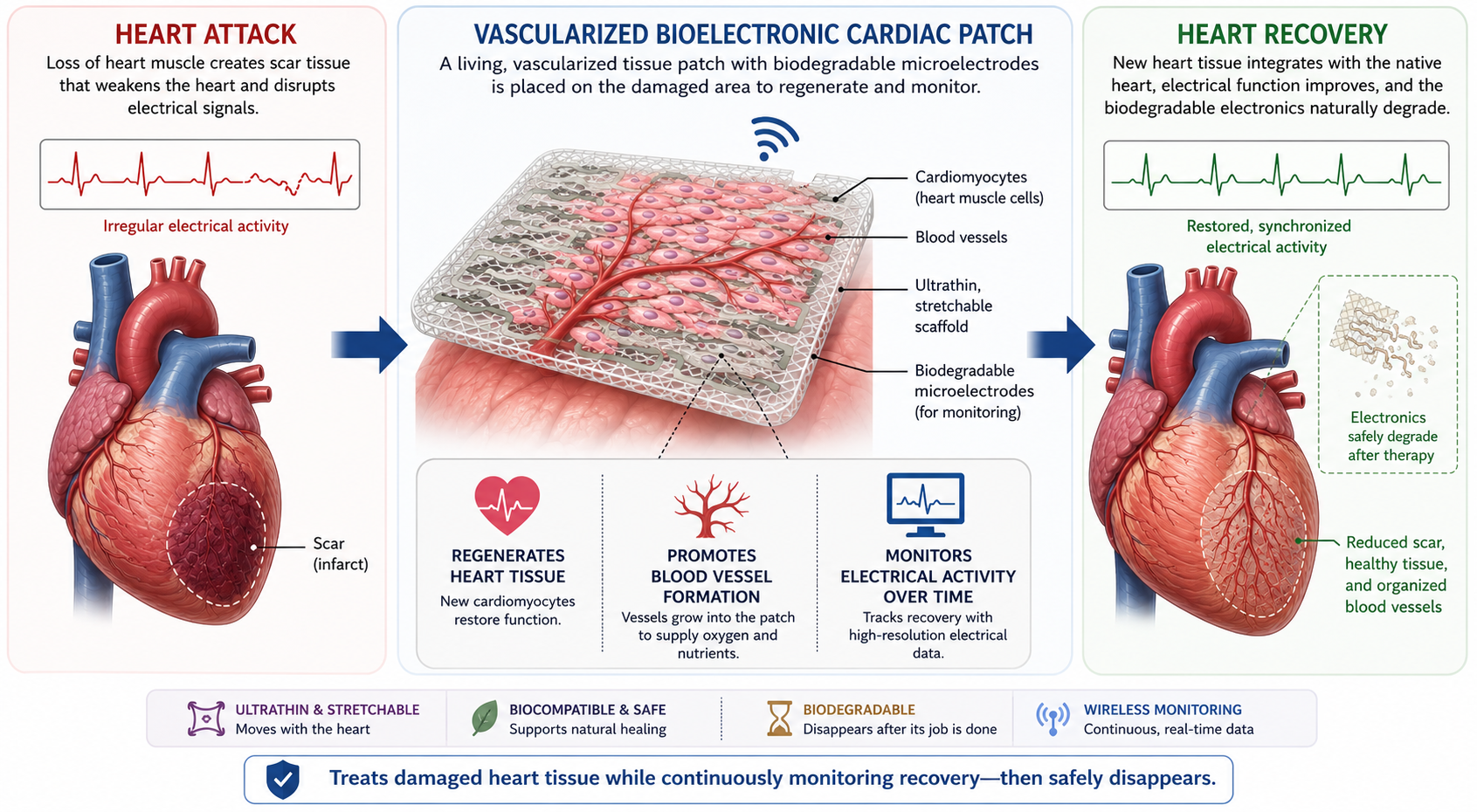
Cardiac regeneration: Cardiac disease remains a leading cause of death worldwide despite major advances in cardiovascular devices and medicine. In patients who suffer ischemic myocardial infarction, the adult human heart has limited capacity for regeneration. Fibrotic scar tissue replaces the lost cardiomyocytes (CMs), and the heart later progresses to failure. Whole heart transplantation remains a viable option for patients with terminal-stage heart failure, but the high incidence of myocardial infarction and the shortage of donor organs impose a significant limitation and demand novel, effective methods to regenerate and repair injured myocardium. Stem cell-based therapies such as engineered cardiac patches (CPs), which morphologically and functionally resemble native myocardium, have recently emerged as a potential solution for cardiac regeneration. Despite major advances in generating stem cell-derived CMs and patches that improve cardiac function, CM maturation and lethal arrhythmic complications from poor electrical or mechanical integration between the CP and host myocardium remain major challenges.
To address these bottlenecks, we develop ultrathin, stretchable electronic cardiac patches that integrate with iPSC-derived human cardiomyocytes and vascular endothelial cells for both in vitro and in vivo applications. These patches carry modalities for electrical stimulation and recording, and for strain sensing to measure cardiac contraction. Our ultimate goal is to create implantable electronic patches that clinicians can monitor and modulate wirelessly for electrophysiological activity.
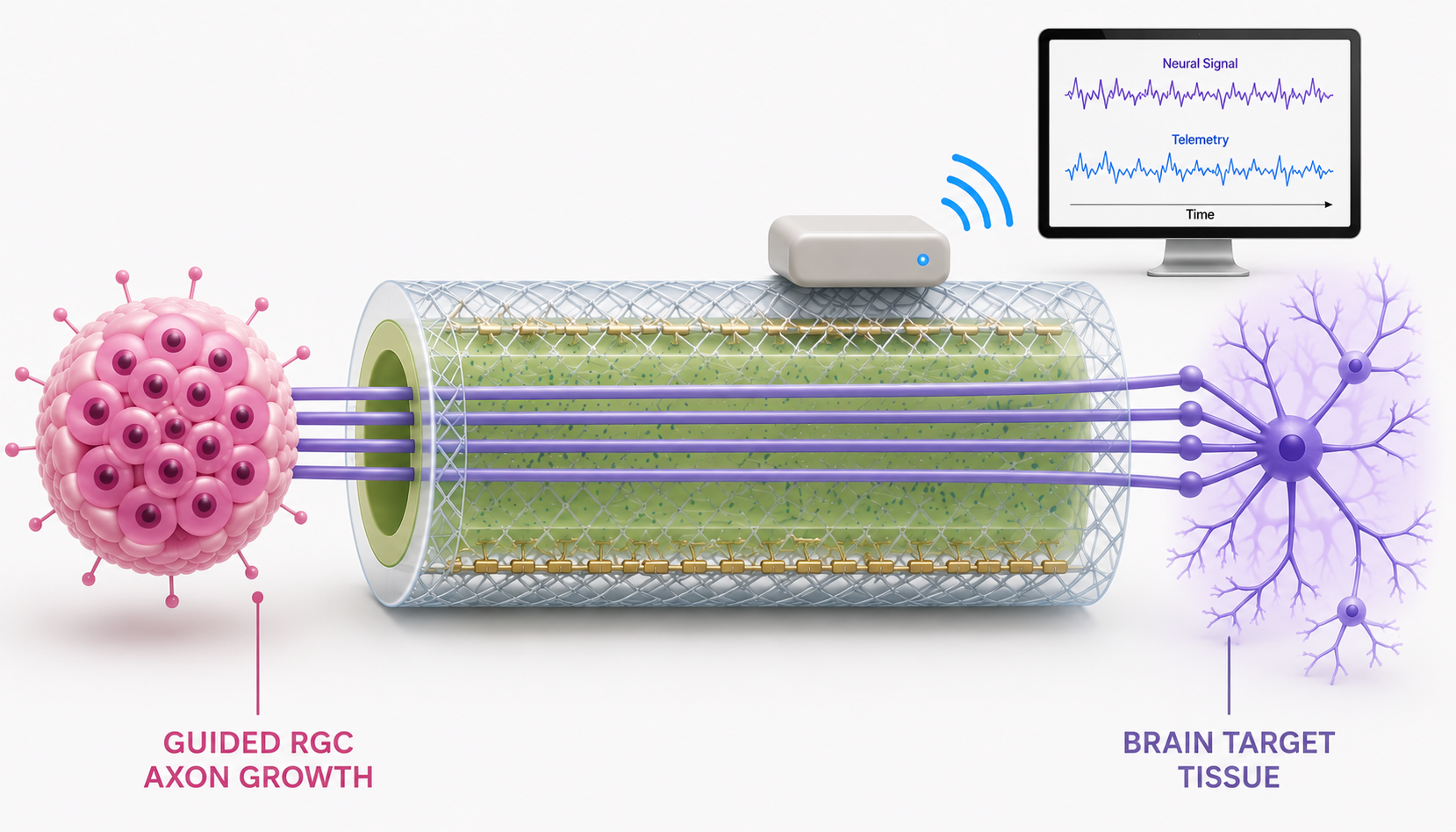
Optic nerve regeneration: Vision loss from optic nerve (ON) injury and degenerative disease affects millions of people worldwide, and no clinical therapy currently restores lost vision once retinal ganglion cell (RGC) axons degenerate. RGCs are the sole projection neurons that carry visual information from the eye to the brain, and unlike peripheral neurons, adult mammalian RGC axons fail to regenerate after injury. Glaucoma, traumatic optic neuropathy, and other ON disorders destroy RGCs and their axons, and this loss is permanent because the adult central nervous system provides a growth-inhibitory environment and RGCs lose their intrinsic regenerative capacity with maturation. Even when surviving or transplanted RGCs extend new axons, these axons must navigate the long, complex path from the eye through the optic nerve, chiasm, and tract to reach their targets in the brain, and few reach appropriate synaptic targets to restore functional vision. Cell replacement strategies that use stem cell-derived RGCs have emerged as a promising approach to replace lost neurons, but transplanted RGCs still face the same barriers to long-distance, directed axon growth that limit endogenous regeneration.
To address this challenge, we develop transient bioelectronic implants that integrate with iPSC-derived human RGCs to guide their axons along the visual pathway toward the brain. These implants provide localized electrical and biochemical guidance cues that direct axon growth and support target-specific innervation, then degrade once RGC axons establish stable connections, leaving no permanent hardware in the visual pathway. Our ultimate goal is to combine stem cell-derived RGC replacement with bioelectronic axon guidance to achieve ON regeneration and restore functional vision after injury or disease.
Graduate students working on the project:
Cardiac tissue regeneration - Sophia Millan, Mohak Patel
Optic nerve regeneration - Jackson Jewell
Ocular Telemetry / Disease Pathophysiology - Mohak Patel, Siddharth Krishnan